
Program: UCSF Helen Diller Hospital - A Hospital of the Future on a Site from the Past

The new UCSF Helen Diller Hospital has been recognized as one of the nation's most innovative hospitals under construction.
The presentation covers the unique challenges and innovative structural solutions involved in building the UCSF Helen Diller Hospital. The project uses an Integrated Form of Agreement (IFOA), bringing together ten different firms—including the owner, builder, and consultants—under a single profit-sharing contract, leading to both collaborative benefits and management complexity.

The hospital is being constructed on a highly constrained, century-old medical campus filled with unmarked utilities, challenging topography, and operational requirements (such as keeping roads and emergency entrances open throughout construction). The building's design is irregular, with cantilevered floors and a footprint squeezed into leftover space, forcing the team to develop creative solutions for structure and function.

The structural system chosen is a steel moment frame with fluid viscous dampers, preferred over base isolation due to site limitations and cost. The moment frame uses bolted side plate connections for added stiffness and constructability, while the viscous dampers—sourced from Taylor Devices—effectively dissipate seismic energy, enhancing resilience without significantly increasing the building’s stiffness or seismic loads. These dampers are maintenance-free and require only post-earthquake inspection.

Custom cast steel nodes were manufactured by Cast Connex to address concerns with large welds and heat input, providing strong, ductile connections for the project’s demanding structural needs. Extensive use of finite element modeling and prototype testing ensured the reliability of both the connections and the dampers.
The team coordinated closely with multiple partners over years of design and review, navigating thousands of comments and frequent cost evaluations associated with the IFOA process. Fabrication of large steel elements was outsourced to a specialized facility in Guadalajara, Mexico, due to the project's size and technical demands.
Despite the complexity and exhaustive coordination, the project is progressing well, with foundations nearly complete and steel erection imminent. The experience has been intense but rewarding, pushing technical boundaries and fostering significant professional growth among the team.
Thank You to Our Guest Speakers and Our Longtime Associates at SEAOCC
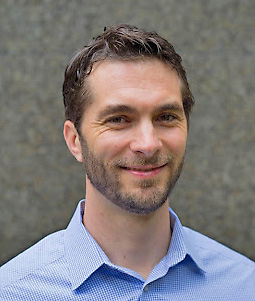 |
Anthony Giammona, S.E.
Vice President, Nabih Youssef Associates
Anthony is a technical leader and Vice President at NYA and has worked on several of NYA's most technically challenging projects. He is a leader in the field of advanced technologies, such as base isolation, fluid viscous dampers, and performance based seismic design, and has authored several publications on the subject. |
 |
Daniel Tunick, S.E.
Project Manager, Nabih Youssef Associates
Daniel Tunick is a Project Manager at NYA with extensive experience in advanced seismic analysis and non-prescriptive design approaches. He has been involved in the design or peer review of over 25 Performance-Based Design projects in high seismic regions along the US West Coast, and has co-authored publications on the use of thin steel plate shear wall lateral systems.
|